
Ninja Air Fryer MAX PRO vs Philips NA231/00: Which Air Fryer Should You Buy in 2026?
Why Upgrading Your Air Fryer Actually Makes Sense
You already know air fryers work. Maybe you have been using a basic model for a year or two — one that does the job for frozen snacks and simple chicken, but leaves you shaking the basket every eight minutes, getting uneven results on larger batches, or waiting longer than you expected for anything that needs a proper char on the outside. The samosas come out pale on one side. The chicken thighs need flipping. The fries are crispy on top and soft underneath. You start to wonder if the problem is the air fryer or the recipe.
It is usually the air fryer. Entry-level models at the ₹3,000 to ₹5,000 price point have motors that do not maintain consistent temperature under load, airflow designs that create hot spots, and maximum temperatures that cap out at 200°C — which is adequate but not optimal for the kind of high-heat sear that makes pakoras genuinely crispy rather than just dry. When you cook Indian food — which often involves high heat, oil-based marinades, and foods that release moisture during cooking — the difference between a good air fryer and an average one shows up immediately in the result.
At the ₹9,000 to ₹11,000 price range, two models stand out as genuinely different from what most Indian buyers have experienced in a home air fryer: the Philips NA231/00 and the Ninja Air Fryer MAX PRO. Both are 6.2 litre capacity. Both are from brands that take air frying technology seriously. But they approach the cooking problem in fundamentally different ways — and understanding that difference is what this comparison is about.
Ninja and Philips — Which Air Fryer Should You Buy in 2026?
Philips invented the air fryer. That is not a marketing claim — they hold the original patent on Rapid Air Technology, the circulating hot air system that defined what an air fryer is. The Philips NA231/00 is their extra-large 6.2L flagship for Indian buyers in 2026, built on the same core Rapid Air principle that has been refined across fifteen years of commercial air fryer development. The starfish-design basket creates a specific vortex airflow pattern that Philips has spent considerable engineering effort optimising for even heat distribution without flipping. For buyers who want the most proven, most researched air frying technology available — Philips is where that technology lives.
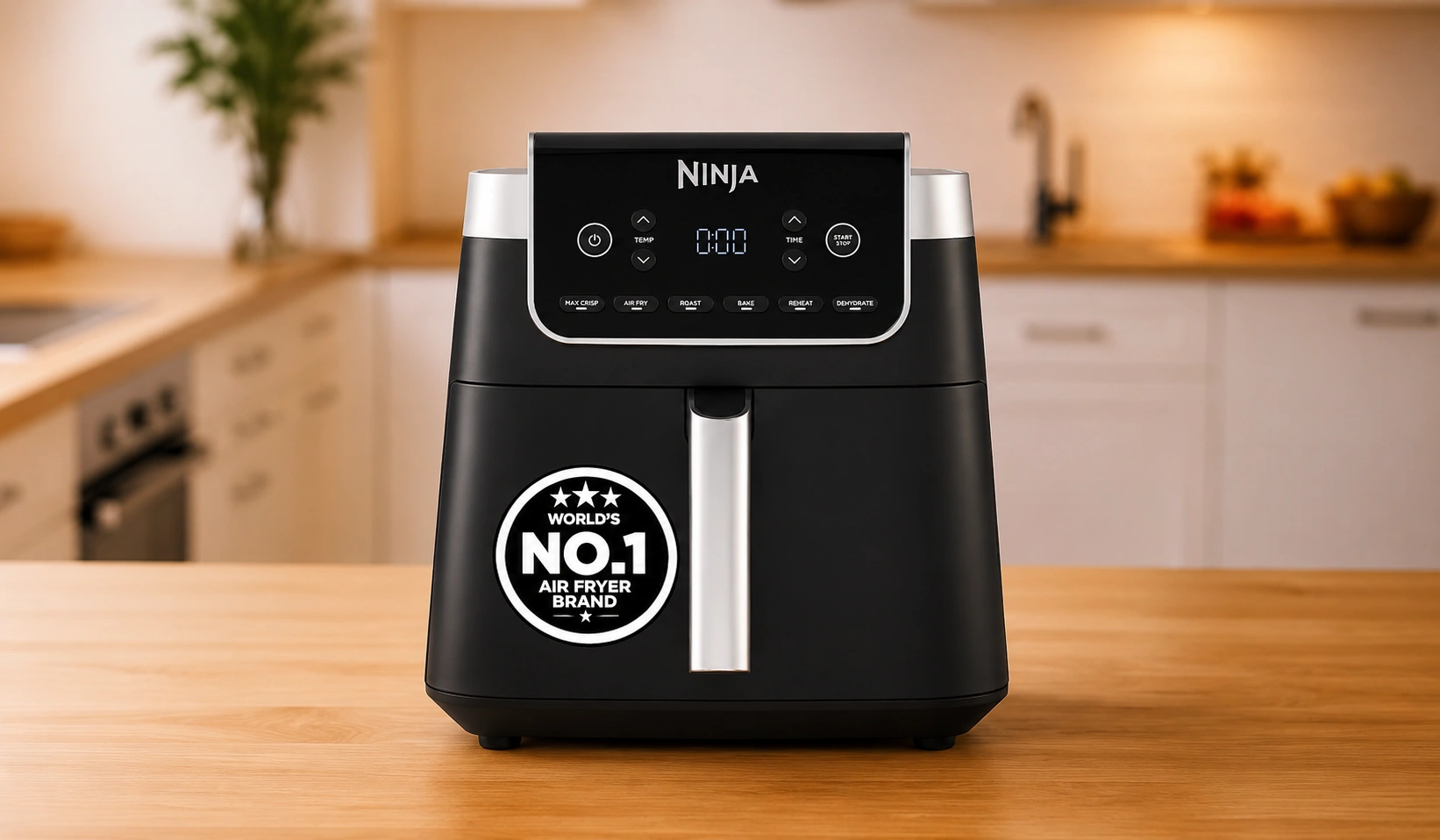
Ninja came to the air fryer category later but with a different engineering ambition. The Ninja MAX PRO is not trying to replicate what Philips does — it is trying to exceed it on specific performance metrics, particularly maximum temperature and cooking speed. The MAX PRO's headline feature is its 240°C maximum temperature with Max Crisp Technology — 40°C higher than the Philips NA231's 200°C ceiling. That 40°C gap is not cosmetic. At 240°C, the surface of food sears and browns in a way that 200°C cannot match — creating the kind of deep golden crust on chicken skin, paneer tikka, and spring rolls that previously required either a very hot conventional oven or actual deep frying. Ninja also built the MAX PRO with a PTFE, PFAS, and PFOA-free cooking surface — a chemical-free non-stick coating that health-conscious buyers have increasingly been asking for.
These are two genuinely premium air fryers from two genuinely serious brands. The question is not which one is better in absolute terms — it is which one is better for how you specifically cook.
Ninja MAX PRO vs Philips NA231 — At a Glance
| Spec | Ninja MAX PRO 6.2L | Philips NA231/00 6.2L |
|---|---|---|
| Price | ₹10,998 | ₹9,788 |
| Capacity | 6.2 Litres | 6.2 Litres |
| Wattage | 2000W | 1700W |
| Max Temperature | 240°C | 200°C |
| Min Temperature | 40°C | 60°C |
| Air Technology | Max Crisp + Variable Airflow | Patented Rapid Air Technology |
| Functions | 6-in-1 (Max Crisp, Air Fry, Roast, Bake, Reheat, Dehydrate) | Touch Panel, Temperature Control |
| Cooking Surface | PTFE/PFAS/PFOA-Free Non-Stick | Standard Non-Stick |
| Cooking Window | No | Yes |
| Controls | Digital | Touch Panel |
| Warranty | 2 Years | 2 Years |
| Fat Reduction | Up to 75% less vs deep fry | Up to 90% less fat |
| Amazon Rating | 4.6 ★ (1,900 reviews) | 4.2 ★ (1,932 reviews) |
Ninja MAX PRO vs Philips NA231: Head-to-Head Comparison
1. Cooking Technology — Max Crisp vs Rapid Air
Philips NA231's Rapid Air Technology uses a starfish-design basket to create a precise vortex of hot air around the food. The starfish ridges on the basket floor force airflow in a specific circular pattern that contacts every surface of the food simultaneously — the same patented design that has made Philips the benchmark for even cooking in home air fryers for over a decade. At 1700W the NA231 heats rapidly and maintains temperature consistently. The result is reliably even browning across the basket with minimal need to shake or flip during cooking.
The Ninja MAX PRO uses what Ninja calls Max Crisp Technology — 240°C superheated air with Smart Variable Airflow that dynamically adjusts fan speed from 1200 RPM at low temperatures to 2600 RPM at maximum heat. This variable airflow system is genuinely different from fixed-speed designs — it means the fan is optimised for the cooking task at each temperature point rather than running at a single constant speed regardless of what it is cooking. At 2000W it is 300W more powerful than the Philips, which translates to faster preheat and more sustained high-temperature cooking under load.
The practical difference for Indian cooking is significant. At 200°C — the Philips' ceiling — you get excellent air frying results for most snacks and proteins. At 240°C — the Ninja's maximum — you get a level of surface searing that starts to approach what a tandoor or very hot conventional oven delivers. Paneer tikka with actual charring on the edges. Chicken with genuinely crispy skin rather than just cooked skin. Spring rolls with a deep golden shell rather than a pale crisp. For anyone who cooks Indian food and has always found air fryer results slightly lacking compared to restaurant-style crispiness, the Ninja's 240°C ceiling is the most meaningful spec on this page.
Ninja's 240°C Max Crisp Technology and variable airflow deliver higher peak cooking performance. Philips' patented Rapid Air design is the more proven system for consistent everyday results without adjustments.
2. Temperature Range and Performance
The Ninja MAX PRO's minimum temperature of 40°C versus the Philips' 60°C is a meaningful difference at the low end — 40°C is genuinely useful for proofing dough, keeping food warm, or slow dehydrating delicate items like herbs and thin fruit slices that would dry too fast at 60°C. For households that bake or use the air fryer for a wider range of cooking tasks beyond just frying and roasting, the Ninja's 200°C wider temperature range gives it more versatility.
At the high end, the 240°C vs 200°C gap is where the Ninja's performance advantage is clearest. Energy saving is also stronger on the Ninja — up to 60% savings versus a conventional oven compared to Philips' claim of 70% less energy than a conventional oven. Both figures are directionally similar and reflect the core air fryer advantage over OTG and oven cooking.
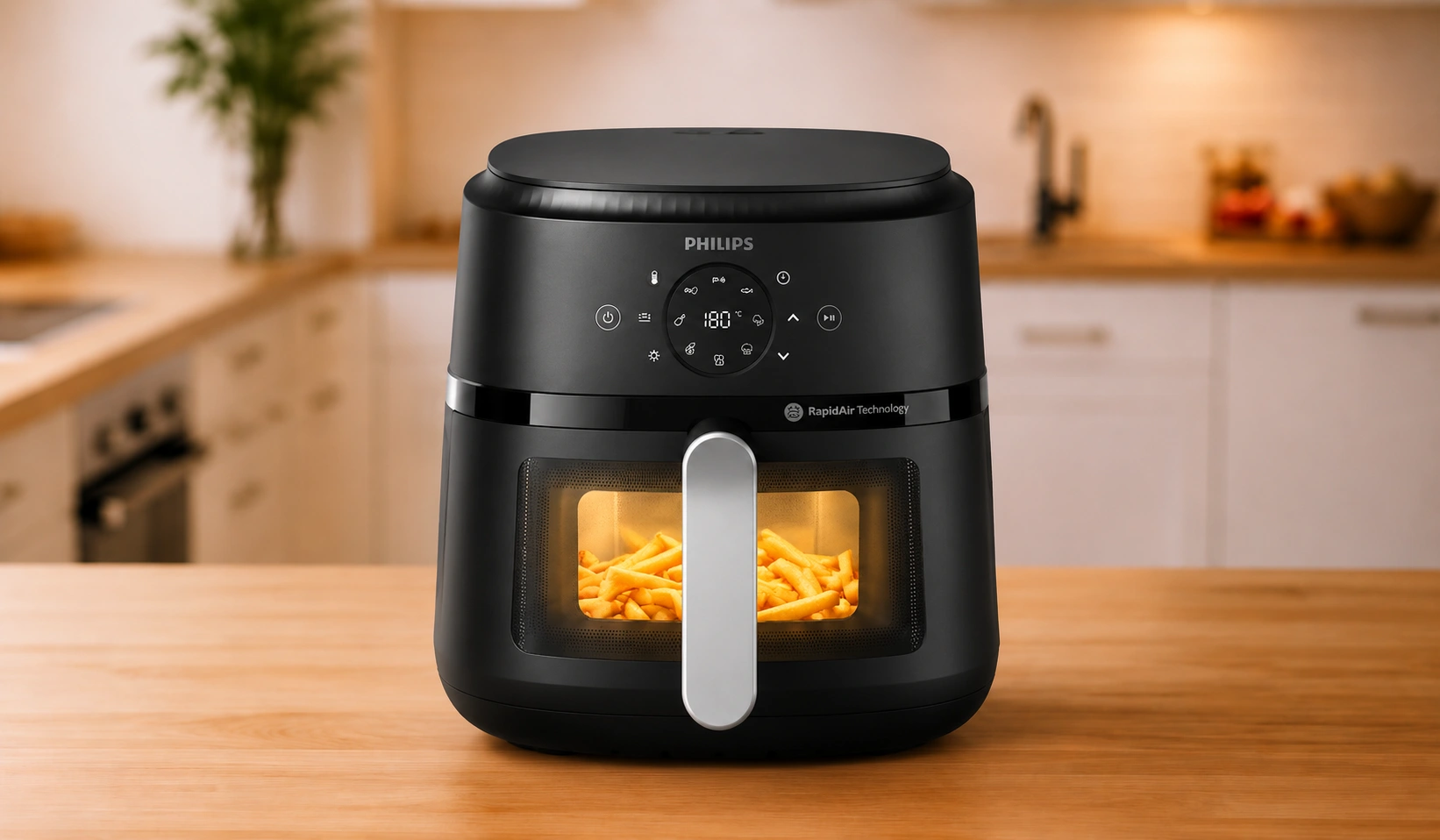
The Philips NA231 counters with a cooking window — a transparent panel on the basket that lets you monitor food without opening the drawer and releasing heat. This is a small but genuinely useful feature for Indian cooking where you want to check colour development on pakoras or chicken without interrupting the cooking cycle. The Ninja MAX PRO does not have a cooking window.
Ninja wins on temperature range — both ceiling and floor. Philips' cooking window is a practical convenience the Ninja does not offer.
3. Features and Functions
The Ninja MAX PRO is a 6-in-1 appliance — Max Crisp, Air Fry, Air Roast, Bake, Reheat, and Dehydrate. The Max Crisp function is distinct from standard Air Fry — it specifically uses the 240°C maximum temperature with the highest fan speed setting to deliver peak crispiness on foods that benefit from aggressive high-heat surface treatment. The Dehydrate function at the low end of the temperature range makes it genuinely useful for making dried fruits, vegetable chips, and snacks at home — a function that dedicated food dehydrators typically handle but that most air fryers perform only adequately.
The PTFE, PFAS, and PFOA-free cooking surface is the Ninja's most health-forward specification. Standard non-stick coatings use PTFE (polytetrafluoroethylene) — effective and safe at normal cooking temperatures but a growing concern for health-conscious buyers who cook at very high temperatures regularly. At 240°C, having a coating that is certified free of these compounds gives the Ninja a meaningful advantage for buyers who specifically care about what their cookware surface is made of. The Philips NA231 uses a standard non-stick coating without this certification.
The Philips NA231's touch panel is clean and intuitive — simple temperature and time adjustment with a touch interface that is easy to operate mid-cook. The HomeID app compatibility from the NA120 carries forward to this range, giving access to 100+ guided recipes calibrated for Philips air fryers. The cooking window is exclusive to this model among the two — it lets you check progress visually without opening the basket.
Ninja wins on function count and the chemical-free cooking surface. Philips wins on app recipe support and the cooking window for monitoring food during the cycle.
4. Design and Build Quality
Both are black, basket-style air fryers in the 6.2L extra-large category. At this capacity both will have a significant counter footprint — measure your available counter space before buying either. The Ninja MAX PRO has a slightly more premium build feel with its aluminium and plastic construction, and the chemical-free non-stick basket reinforces that premium positioning. The Philips NA231's cooking window adds a visual element that makes the design more functional — you can see food browning without opening the unit.
Ninja is a relatively newer brand in India compared to Philips — their appliances have been available through Amazon India for a few years but their physical service infrastructure is less established than Philips'. Philips has decades of India presence, authorised service centres in most cities, and a spare parts supply chain that is well-established. For a ₹10,000+ appliance, after-sales service availability is a real consideration — and Philips has the stronger track record on this in the Indian market specifically.
Ninja has the edge on build materials and chemical-free coating. Philips has the stronger after-sales service infrastructure in India — a meaningful long-term consideration at this price point.
5. Price and Value
The Philips NA231 at ₹9,788 is ₹1,210 less than the Ninja MAX PRO at ₹10,998. Both carry a 2-year warranty. The Philips has more Amazon reviews at a similar rating count — 1,932 reviews at 4.2 stars vs Ninja's 1,900 at 4.6 stars — though the Ninja's higher rating at comparable review volume is a meaningful signal of stronger buyer satisfaction.
The value equation depends entirely on what the 240°C maximum temperature means to you. If you cook Indian food at high heat regularly — tandoori-style proteins, heavily marinated paneer, snacks that need genuine deep-fry-level crispiness — the Ninja's ₹1,210 premium buys you a 40°C temperature advantage that changes the quality of your results in a way that is immediately noticeable. If you cook a broader range of foods at moderate heat — roasting vegetables, baking, reheating, everyday snacks — the Philips delivers proven results at a lower price with better India-specific after-sales support.
Philips offers better value for everyday cooking with stronger India after-sales support. Ninja justifies its premium specifically for buyers who need the 240°C ceiling and chemical-free cooking surface.
Final Verdict — Which One Should You Buy?
You cook Indian food at high heat regularly and want the crispiest results possible — the 240°C Max Crisp Technology is a genuine performance upgrade over anything at 200°C. You care about a chemical-free PTFE/PFAS/PFOA-free cooking surface. You want the widest temperature range for dehydrating, proofing, and precision cooking. And you are comfortable with a newer brand that is still building its India service network.
You want the most proven air frying technology from the brand that invented it, at ₹1,210 less. The cooking window for monitoring food mid-cycle is a genuine daily convenience. Philips' established India after-sales network gives you stronger long-term support confidence. And the HomeID app's guided Indian recipes removes the trial and error that comes with learning a new appliance. For most Indian home cooks cooking a broad range of dishes, the Philips NA231 is the more complete daily-use air fryer.
Our pick for most buyers is the Philips NA231 — the proven technology, cooking window, lower price, and stronger India service presence make it the safer investment for everyday Indian home cooking. The Ninja MAX PRO is the right call specifically for buyers who cook high-heat Indian food daily and want the absolute maximum crispiness an air fryer can deliver. If you want to see how both compare against more budget-friendly options, our full guide to the best air fryers under 5000 in India 2026 covers five models across the budget range.
Frequently Asked Questions
Is Ninja better than Philips air fryer?
For peak cooking performance — particularly at high temperatures above 200°C — the Ninja MAX PRO has the edge with its 240°C Max Crisp Technology and 2000W motor. For proven everyday reliability, cooking window convenience, India after-sales support, and lower price, Philips NA231 is the stronger choice for most Indian buyers. Neither is categorically better — the right choice depends on whether maximum temperature performance or proven reliability matters more to you.
What does PTFE-free and PFOA-free mean in an air fryer?
PTFE is polytetrafluoroethylene — the chemical compound used in most standard non-stick coatings. PFOA is perfluorooctanoic acid, a chemical historically used in the manufacturing process for PTFE coatings. Both have been associated with health concerns at very high temperatures in repeated long-term use. The Ninja MAX PRO's cooking surface is certified free of PTFE, PFAS, and PFOA — meaning it uses an alternative non-stick compound that avoids these chemicals entirely. For buyers who cook at the Ninja's maximum 240°C regularly, this certification provides an additional layer of safety confidence that the Philips NA231 does not offer.
Is 6.2 litres enough for a family of 4?
Yes — 6.2 litres is the extra-large category and comfortably handles a full meal for a family of 4 in most cases. A complete batch of french fries, 6 to 8 pieces of chicken, or a generous tray of snacks for the evening all fit in a 6.2L basket without needing multiple rounds. For Indian cooking where portion sizes for snacks and sides tend to be generous, 6.2L is the right capacity for a family of 4 cooking two meals daily. Families of 5 or more cooking large quantities of food simultaneously may still need two batches for very large meals.
Can I make tandoori chicken in an air fryer?
Yes — and the Ninja MAX PRO at 240°C comes closest to replicating tandoori results of any home air fryer at this price point. Tandoor ovens operate at 480°C to 500°C, which no home appliance can match — but the combination of 240°C air temperature, high fan speed, and the Maillard reaction at that heat creates genuinely charred edges and crispy skin on marinated chicken that a 200°C air fryer cannot achieve to the same degree. For the Philips NA231, tandoori-style chicken comes out well cooked and flavourful — just without the same surface char that 240°C produces.
Which air fryer is best for Indian cooking in 2026?
For everyday Indian cooking — samosas, pakoras, aloo tikki, chicken, fish fry, and reheating — the Philips NA231 is the most complete daily-use air fryer at this price range. For high-heat cooking where maximum crispiness and tandoori-style results matter, the Ninja MAX PRO's 240°C ceiling makes it the stronger technical choice. For buyers on a tighter budget, our guide to the best air fryers under 5000 in India covers five solid options starting from ₹2,499 that handle everyday Indian snacks and proteins well without the premium price.
Does the Philips NA231 need the HomeID app to work?
No — the Philips NA231 works completely standalone without the app. The touch panel controls temperature and timer directly on the unit. The HomeID app is an optional companion that provides guided recipes calibrated for the NA231's cooking chamber — useful for new air fryer users who want specific time and temperature guidance for Indian and international dishes without trial and error. The app is available for free on Android and iOS and connects via Bluetooth.
Also Read:Best Air Fryers Under 5000 in India 2026 | Philips Air Fryer NA120 vs Milton Rapid 5L | Best Chimney for Kitchen Under 10000 in India 2026