
LG vs Samsung Washing Machine (8kg Top Load): Which One Should You Buy in 2026?
Both the LG T80VBMB4Z and Samsung WA80F08S2LTL are priced at ₹21,990 with the same 8kg capacity and 5-star rating. Choose the LG if you do heavy daily laundry with heavily soiled clothes and want stronger mechanical wash power and a higher 740 RPM spin speed. Choose the Samsung if you wash mixed fabrics including sarees and delicates, want 12 wash programs, Wi-Fi SmartThings control, and AI Wash automation. Same price — very different machines.
- Why Choosing Between LG and Samsung Washing Machine Is So Confusing
- LG vs Samsung Washing Machine: What Makes Them Different?
- LG T80VBMB4Z vs Samsung WA80F08S2LTL: At a Glance
- LG vs Samsung Top Load Washing Machine: Head-to-Head Comparison
- Who Should Buy Which — A Simple Guide
- What to Look for in a Top Load Washing Machine in India
- So Which One Should You Finally Buy?
- Frequently Asked Questions
Why Choosing Between LG and Samsung Washing Machine Is So Confusing
Your old washing machine finally gave up after eight years — or you are buying your first fully automatic and standing on Amazon staring at forty-seven models that all claim to be the best under ₹25,000. LG says Smart Inverter and TurboDrum. Samsung says Digital Inverter, Ecobubble, and AI Wash. Both claim 5-star energy ratings. Both promise 10-year motor warranties. Both are priced identically. And every spec on the listing sounds like it was written by someone whose job was to make a straightforward decision as complicated as possible.
The confusion is real and largely by design. Washing machine marketing in India has become a proprietary terminology arms race — every brand invents new names for incremental differences in standard technology. TurboDrum sounds very different from Ecobubble, but what do they actually mean for how clean your clothes come out? Is AI Wash genuinely useful or just a feature nobody uses after the first week? Does the drum type matter or is it just aesthetics?
These are the questions this comparison answers directly. At ₹21,990 — the same price for both machines — this is a purchase you will use twice a day for five to eight years. Getting it right matters more than it seems standing at the checkout page.
LG vs Samsung Washing Machine: What Makes Them Different?
LG and Samsung are the two most trusted washing machine brands in India and have been competing directly in the Indian market for over two decades. Both manufacture locally, both have extensive pan-India service networks, and both sell enormous volumes of washing machines to Indian households every year. The choice between them is genuinely close — and at identical price points the deciding factors come down to specific technology philosophies rather than one brand being categorically better.
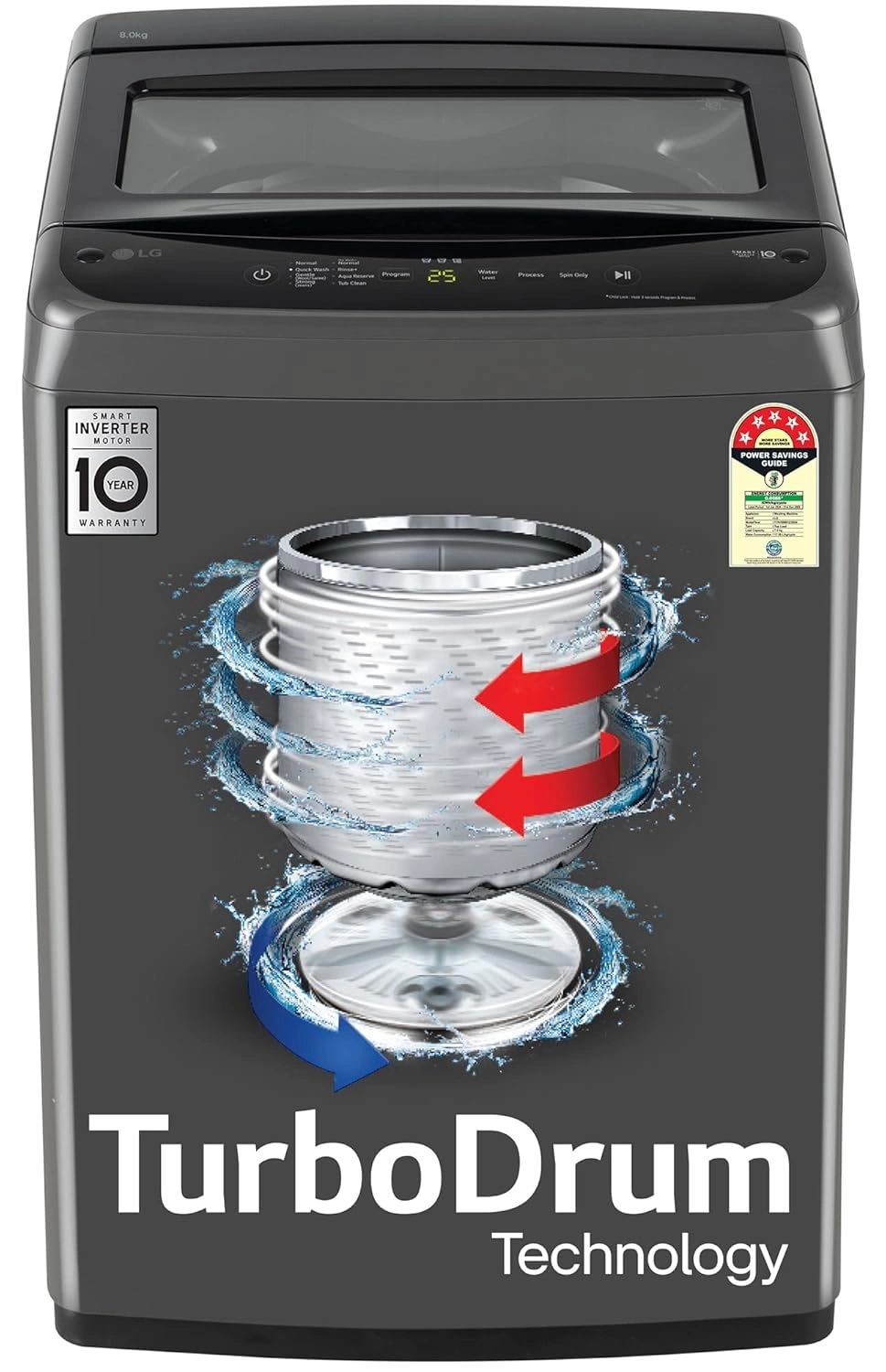
LG's approach centres on mechanical wash power. The TurboDrum system rotates the drum and pulsator in opposite directions simultaneously, creating a stronger cross-current of water that lifts tough dirt more aggressively from fabric fibres. Their Smart Inverter motor uses direct-drive technology eliminating the belt-and-pulley system of older machines — quieter, more efficient, and less prone to mechanical wear over time. LG's philosophy is fundamentally about washing power and motor reliability built for the long haul.
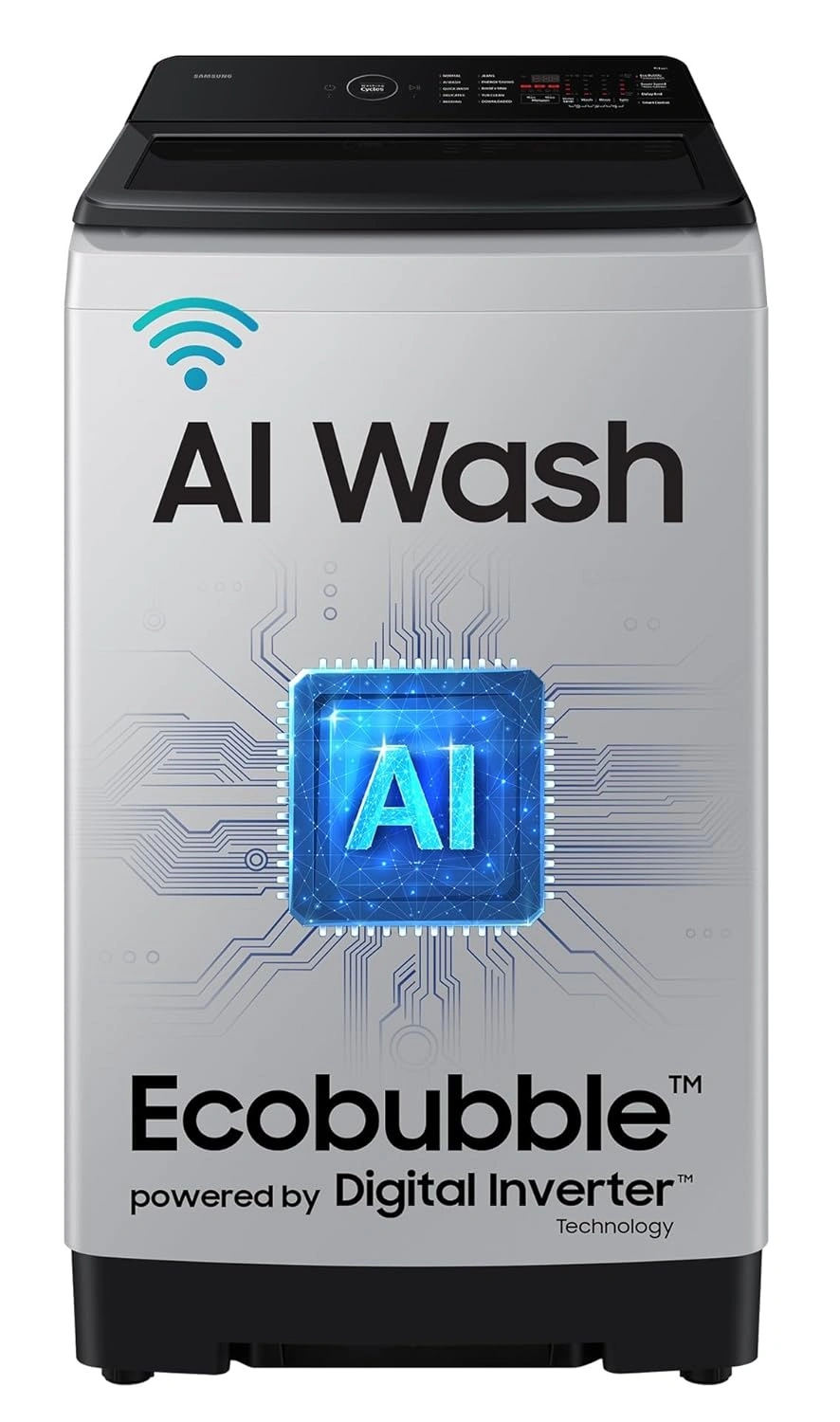
Samsung's approach in 2026 is built around intelligent automation. AI Wash uses sensors to detect the weight and softness of the fabric load and automatically adjusts wash settings accordingly — removing the guesswork from cycle selection. Ecobubble dissolves detergent in water before it enters the drum, creating a foam that penetrates fabric fibres faster than standard liquid detergent and delivers effective cleaning even at lower water temperatures. Wi-Fi connectivity via SmartThings, AI Energy Mode, and AI VRT+ vibration reduction reflect Samsung's push toward smart home integration. Samsung's philosophy is fundamentally about making laundry intelligent and effortless.
LG T80VBMB4Z vs Samsung WA80F08S2LTL: At a Glance
 ₹21,990
| Spec | LG T80VBMB4Z | Samsung WA80F08S2LTL |
|---|---|---|
| Price | ₹21,990 | ₹21,990 |
| Capacity | 8 Kg | 8 Kg |
| Star Rating | 5 Star | 5 Star |
| Wash Technology | TurboDrum + Auto Prewash | Ecobubble + AI Wash + BubbleStorm |
| Motor | Smart Inverter | Digital Inverter (DIT) |
| Spin Speed | 740 RPM | 700 RPM |
| Wash Programs | 8 | 12 |
| Wi-Fi / Smart Control | No | Yes (SmartThings) |
| AI Features | Fuzzy Logic | AI Wash + AI Energy Mode + AI VRT+ |
| Drum Type | Semi Stainless Steel | 2nd Diamond Drum |
| Child Lock | Yes | Yes |
| Quick Wash | Yes | Yes |
| Delay Start | Yes (3–18 hrs) | Yes |
| Noise Level | 54 dB | Not specified |
| Product Warranty | 2 Years | 2 Years |
| Motor Warranty | 10 Years | 10 Years |
| Amazon Rating | 4.1 ★ (1,355 reviews) | 4.1 ★ (1,664 reviews) |
LG vs Samsung Top Load Washing Machine: Head-to-Head Comparison
1. Wash Technology — TurboDrum vs Ecobubble
The LG T80VBMB4Z uses TurboDrum — the drum and pulsator rotate in opposite directions simultaneously, creating a powerful cross-current of water that lifts dirt more aggressively from fabric fibres than standard single-direction drum rotation. This counter-rotation reaches deep into fabric weaves and is particularly effective on heavily soiled clothes — workwear, children's school uniforms, sports clothes, anything with mud or food stains ground into the fabric. The Auto Prewash feature adds an automatic pre-treatment stage for heavily soiled loads without manual soaking — genuinely useful for Indian households where clothes regularly come in needing more than a standard wash cycle.
Samsung's Ecobubble works on a fundamentally different principle. It mixes detergent with air and water before the drum fills, creating a dense foam that penetrates fabric fibres up to 40 times faster than liquid detergent added directly. The result is effective cleaning at lower water temperatures — cold water washing that delivers the same stain removal as warm water washing with standard detergent. BubbleStorm on this model takes Ecobubble further with more intensive foam generation for tougher loads. AI Wash uses sensors to detect load weight and fabric softness before the cycle starts, automatically optimising time, water level, and agitation intensity. For households washing a mix of cottons, delicates, sarees, and synthetic fabrics in the same machine, AI Wash reduces the risk of over-washing items that ended up on the wrong cycle.
LG TurboDrum delivers stronger mechanical wash performance for heavily soiled everyday clothes. Samsung Ecobubble with AI Wash is gentler on mixed fabric loads, more effective at cold water temperatures, and more intelligent about adapting to different load types without manual intervention.
2. Energy Efficiency and Motor
Both machines carry a 5-star BEE rating — the highest energy efficiency certification available — and both use inverter motor technology that eliminates the conventional belt-and-pulley drive, reducing energy consumption, noise, and mechanical wear. Both carry a 10-year motor warranty. The LG's energy consumption is rated at 0.0085 KWh/kg/cycle and Samsung at 0.0083 KWh/kg/cycle — a negligible real-world difference.
The LG's Smart Inverter motor delivers 740 RPM spin speed versus Samsung's 700 RPM. Higher spin speed extracts more water from clothes during the spin cycle — meaning clothes come out drier and take less time to air dry afterwards. In Indian conditions where outdoor line drying is the norm, the LG's 40 RPM advantage means slightly drier clothes out of the machine, which matters significantly during monsoon season when drying time outdoors is limited and even a 10% difference in residual moisture can be the difference between clothes that dry in a few hours and clothes that smell damp by evening.
Samsung's AI Energy Mode uses real-time AI to reduce energy consumption by up to 20% by monitoring the load and dynamically adjusting motor speed and water heating throughout the cycle. For households running the machine daily, this cumulative saving compounds meaningfully over a year of use beyond what a standard inverter motor delivers on its own.
LG's 740 RPM spin speed means drier clothes out of the machine — a meaningful practical advantage in Indian drying conditions. Samsung's AI Energy Mode delivers smarter ongoing energy optimisation that compounds over daily use.
3. Wash Programs and Smart Features
Samsung offers 12 wash programs versus LG's 8 — and the additional programs are genuinely useful for Indian households rather than marketing padding. Samsung includes dedicated cycles for Sari, Baby Care, Colors, Bedding, Towels, and Super Clean alongside standard Normal, Quick Wash, Rinse and Spin, and Tub Clean. For Indian households where sarees, delicate cotton fabrics, and heavy bedding all go through the same machine, dedicated cycles calibrated for each fabric type is a meaningful daily advantage. The Downloaded Cycle feature via SmartThings allows adding wash programs beyond the 12 built in — future-proofing the machine in a way the LG cannot match.
Samsung's Wi-Fi connectivity via SmartThings lets you start, pause, monitor, and schedule wash cycles remotely from your phone — genuinely useful for households where someone leaves for work before the wash finishes and wants to monitor it or schedule the next cycle to finish by the time they return. Smart Check allows remote diagnosis of error codes without calling a technician for common issues.
The LG covers the essentials well — Normal, Quick Wash, Gentle for woolens and sarees, Strong for heavy fabrics, Pre-wash plus Normal, Rinse Plus, Aqua Reserve, and Tub Clean. Fuzzy Logic detects load weight and selects appropriate wash settings automatically. Delay Start of 3 to 18 hours handles off-peak electricity scheduling. No Wi-Fi or app connectivity — which for some buyers is a feature rather than a limitation.
Samsung wins on programs and smart features — 12 programs including dedicated Sari and Baby Care cycles, Wi-Fi SmartThings control, and downloadable wash cycles give it meaningfully more daily utility for Indian households with varied fabric washing needs.
4. Build Quality and Drum
The LG T80VBMB4Z uses a semi stainless steel drum — the interior surface that contacts your clothes is stainless steel, more hygienic, more durable, and gentler on fabrics than plastic drum interiors. Stainless steel resists rust, bacterial build-up, and odour more effectively in Indian hard water conditions where mineral deposits accumulate over time. The steel body, soft-closing lid, and LED display with hard push buttons give it a solid, purposeful build without unnecessary complexity. Rat mesh protection is included — a practical Indian-market detail that most buyers only think about after they need it.
Samsung's 2nd Diamond Drum has diamond-shaped depressions with water exit holes 25% smaller than standard drums, located deep within each depression. Samsung claims clothes slide over the raised diamond surfaces rather than contacting hole edges directly, reducing fabric abrasion over repeated wash cycles. The drum is described as rust-proof and scratch-resistant. The tempered glass lid window and touch control panel give it a premium contemporary look. The painted body finish suits a modern laundry space cleanly.
LG's stainless steel drum is the more practical long-term choice for hygiene and durability in Indian hard water. Samsung's Diamond Drum is gentler on delicate fabrics and the tempered glass lid and touch controls give it a more premium aesthetic.
5. Price and Value
Both machines are identically priced at ₹21,990 — the cleanest value comparison possible. Same price, same 8kg capacity, same 5-star rating, same 2-year product warranty, same 10-year motor warranty. The decision comes down entirely to which technology and features matter more to your specific household rather than any budget trade-off.
The LG delivers stronger mechanical wash power through TurboDrum, higher 740 RPM spin speed, a stainless steel drum, and a simpler push-button interface with no connectivity dependency. For households that want raw wash performance for consistently heavily soiled daily laundry, this is the more effective machine at the same price.
The Samsung delivers more intelligent washing through AI Wash and Ecobubble, 12 programs covering a wider range of Indian fabric types including a dedicated Sari cycle, Wi-Fi SmartThings remote control, downloadable wash cycles, AI Energy Mode, and a premium look and feel. For households with mixed fabric loads, people who want remote monitoring, or buyers who value Samsung's smart home ecosystem, the Samsung delivers more daily utility at the identical price.
Same price, genuinely different strengths. LG wins on wash power, spin speed, and drum durability. Samsung wins on programs, smart features, and fabric care versatility. Neither is a compromise — the right choice depends entirely on your laundry profile.
Who Should Buy Which Washing Machine
Buy the LG T80VBMB4Z if you: do heavy daily laundry with significantly soiled clothes — workwear, school uniforms, sports clothes, or fabrics with ground-in mud and food stains. Want the highest spin speed at 740 RPM for drier clothes out of the machine. Prefer simple push-button controls with no dependency on Wi-Fi or apps. Cook and wash with hard water and want the most durable drum material for long-term use. Have children at home and want Auto Prewash for stubborn stains without manual soaking.
Buy the Samsung WA80F08S2LTL if you: wash a mix of fabric types — sarees, delicates, baby clothes, heavy bedding — and want dedicated wash programs for each. Want Ecobubble's gentler cold-water washing that is easier on delicate Indian fabrics over repeated cycles. Want Wi-Fi control via SmartThings to monitor and schedule washes from your phone. Want AI Wash to automatically optimise every cycle without manual program selection. Care about a premium aesthetic with a tempered glass lid and touch controls in your laundry space.
What to Look for in a Top Load Washing Machine in India
Capacity matched to family size. 6 kg suits a family of 2 to 3. 7 to 8 kg suits a family of 4 to 6. Above 8 kg suits large joint families or households that wash bedding frequently. Both machines at 8 kg are well-suited for families of 4 to 6 people doing daily laundry. Oversizing wastes water and electricity on half-full loads. Undersizing means running the machine twice for every large load.
Inverter motor is non-negotiable in 2026. Both machines use inverter motors — which is the right standard. Non-inverter washing machines waste significantly more electricity and wear out faster. At this price point there is no reason to consider a non-inverter model. The 10-year motor warranty on both confirms inverter motor longevity.
Spin speed affects drying time more than most buyers realise. Higher RPM extracts more water during the spin cycle. In Indian conditions where line drying is the norm, clothes coming out of a 740 RPM spin are meaningfully drier than 700 RPM — which translates to faster drying, less smell risk during monsoon, and lower electricity if you use a dryer. The LG's 40 RPM advantage is small on paper but tangible in daily use.
Hard water compatibility matters across India. If your water TDS is above 300 ppm — which includes most cities in Rajasthan, Gujarat, Tamil Nadu, and parts of Delhi NCR — choose a machine with a stainless steel drum interior and a dedicated Tub Clean cycle. Both machines qualify. Running the Tub Clean cycle monthly removes mineral deposits and detergent residue that accumulate in hard water conditions and cause odour over time.
After-sales service reach is as important as the machine itself. Both LG and Samsung have strong pan-India service networks including tier-2 and tier-3 cities. Check the nearest authorised service centre for whichever brand you choose before buying — particularly in smaller cities where response times and spare parts availability can vary significantly between brands.
So Which One Should You Finally Buy?
You do heavy daily laundry with heavily soiled clothes, want the strongest mechanical wash performance, need the highest spin speed for faster drying, prefer simple reliable controls without Wi-Fi dependency, and want a stainless steel drum that handles Indian hard water durably over years of daily use.
You wash a mix of fabric types including sarees and delicates and want dedicated programs for each, want Ecobubble's gentler cold-water washing, want Wi-Fi SmartThings control and AI Wash automation, and want the more intelligent and versatile washing machine at the same ₹21,990 price point.
For most Indian households with mixed laundry needs — which covers the majority of Indian families — the Samsung WA80F08S2LTL edges ahead at the same price. The 12 wash programs including a dedicated Sari cycle, Ecobubble gentleness on fabrics, AI Wash automation, and Wi-Fi SmartThings integration give it more daily utility than the LG's simpler but more powerful feature set. For households with consistently heavy, heavily soiled laundry loads where raw mechanical wash power and faster spin drying matter most, the LG TurboDrum is the stronger technical choice.
 ₹20,790
₹21,990
₹20,790
₹21,990
LG vs Samsung Washing Machine: Frequently Asked Questions
Which is better — LG or Samsung washing machine?
Both are excellent at the same ₹21,990 price point. LG T80VBMB4Z wins on mechanical wash power with TurboDrum, higher 740 RPM spin speed, and stainless steel drum durability — better for heavy soiled daily laundry. Samsung WA80F08S2LTL wins on intelligent automation with AI Wash, Ecobubble, 12 wash programs including a dedicated Sari cycle, and Wi-Fi SmartThings control — better for mixed fabric households. Same warranty, same capacity, same price — the better choice depends entirely on your laundry profile.
Is 8 kg washing machine enough for a family of 4?
Yes — 8 kg is well suited for a family of 4 doing daily laundry. As a rough guide, 1 kg of capacity handles roughly one full adult outfit including undergarments. A family of 4 doing one daily wash load comfortably fits within 8 kg with room for towels or light bedding. For joint families of 6 or more running the machine twice daily or frequently washing heavy bedding, a 10 kg model would be more efficient. Both the LG T80VBMB4Z and Samsung WA80F08S2LTL are specifically listed as suitable for large families at 8 kg capacity.
Does the LG washing machine have a child lock?
Yes — the LG T80VBMB4Z has a child lock that prevents accidental cycle changes or starts. The Samsung WA80F08S2LTL also has a child lock activated via a double key press combination on the touch control panel. Both machines lock the control interface completely when child lock is engaged — standard safety on fully automatic washing machines at this price range.
Which washing machine is best for Indian hard water?
Both the LG T80VBMB4Z and Samsung WA80F08S2LTL are designed for Indian water conditions including hard water — both include rat mesh protection, rust-resistant body treatments, and drum materials suited to mineral-heavy water. Samsung's Ecobubble is particularly effective in hard water because bubble-based detergent activation is less dependent on water temperature and mineral content than standard detergent dispensing. Both include a Tub Clean cycle — run it monthly in high TDS areas to remove mineral deposits and maintain wash performance over time.
Can these washing machines handle heavy fabrics like jeans and bedsheets?
Yes — both handle heavy fabrics effectively. The LG has a dedicated Strong program for heavily soiled durable garments like jeans and overalls, and TurboDrum's counter-rotation is particularly effective for thick fabrics needing strong agitation. The Samsung has a Bedding program for large heavy items and an Intensive Wash option for extra cleaning power. Both machines at 8 kg capacity handle a full set of bedsheets or 2 to 3 pairs of jeans in a single cycle comfortably.
Does the Samsung washing machine have a quick wash setting?
Yes — the Samsung WA80F08S2LTL has a Quick Wash program for lightly soiled clothes that need a fast turnaround. The LG T80VBMB4Z also has Quick Wash for the same purpose. Both quick wash programs are designed for clothes that are not heavily soiled and just need a refresh rather than a full wash cycle — useful for gym clothes, lightly worn shirts, or clothes that just need the smell washed out rather than deep stain removal.
Is the Samsung washing machine energy efficient?
Yes — the Samsung WA80F08S2LTL carries a 5-star BEE rating, the highest energy efficiency certification available in India, with an energy consumption of 0.0083 KWh/kg/cycle. The AI Energy Mode reduces consumption by up to 20% further by dynamically optimising motor speed and water heating based on the actual load. The Digital Inverter motor eliminates the conventional belt-and-pulley drive system, reducing energy waste from mechanical friction. For households running the machine daily, the 5-star rating and AI Energy Mode combine to deliver meaningful electricity bill savings compared to older non-inverter or lower-rated machines.
Also Read: Best AC Under 30000 in India 2026 | Best Water Purifiers Under 10000 in India 2026 | Kent Grand vs Aquaguard Sure Delight NXT