
Faber vs Glen Chimney: Which Kitchen Chimney Should You Buy in 2026?
Choose Faber Pluto at ₹6,619 if you do heavy daily Indian cooking with significant oil and ghee use, want the quietest chimney on this list at 49 dB, and need the longest motor warranty at 12 years — the baffle filter handles Indian cooking conditions more durably at this price. Choose Glen Hood Senza at ₹10,699 if you want filterless thermal auto-clean convenience, higher 1200 m³/hr suction, touch and gesture controls, and a curved glass design that suits a modern modular kitchen — at a ₹4,080 premium over the Faber.
- Why Your Kitchen Chimney Stops Working Properly After a Year
- Faber vs Glen Kitchen Chimney: What Makes Them Different?
- Faber Pluto vs Glen Hood Senza: At a Glance
- Faber vs Glen Chimney: Head-to-Head Comparison
- Who Should Buy Which — A Simple Guide
- What to Look for in a Kitchen Chimney in India
- So Which Kitchen Chimney Should You Finally Buy?
- Frequently Asked Questions
Also Read: LG vs Samsung Washing Machine: Which One Should You Buy?
Why Your Kitchen Chimney Stops Working Properly After a Year
Most Indian households buy a chimney, get it installed, and experience six months of perfectly clear kitchens — the tadka smoke disappears, the walls stay clean, the cooking smell clears within minutes. Then something changes. The suction feels weaker. You notice oil residue building up inside the housing. The auto-clean cycle that was supposed to handle everything is leaving deposits you cannot quite reach. You call the service number and wait three days for a callback.
This is the chimney ownership experience that nobody writes about in buying guides — because buying guides are written before the purchase, not eighteen months after it. Indian cooking is genuinely harder on chimneys than most product specs are tested against. Daily tadkas with mustard oil and ghee, deep frying, pressure cooking with turmeric that stains everything it touches, cooking two to three full meals for a family every single day — the grease accumulation in an Indian kitchen chimney in one month would take a European kitchen six months to produce.
The two things that actually determine whether a chimney serves you well three years from now — filter technology matched to your cooking style, and a service network that actually responds when something goes wrong — are rarely explained clearly in comparison posts. Faber and Glen are both well-regarded chimney brands in India, but they approach these two things very differently. Here is the honest breakdown.
Faber vs Glen Kitchen Chimney: What Makes Them Different?
Faber is an Italian brand founded in 1955 — one of the original kitchen ventilation companies in the world — with manufacturing in Pune, India. Their India operations have been running for over two decades with a service network of 300+ franchisees specifically for chimneys, covering metros, tier-2, and tier-3 cities. Faber's India manufacturing means spare parts are domestically stocked without import delays, and their chimney-specific service infrastructure is the most established in the Indian market. The Faber Pluto at ₹6,619 is their most popular budget model — 5,415 Amazon reviews at 4.6 stars with 1,000+ monthly sales is a validation level that very few kitchen appliances at this price point achieve.
Glen is a dedicated Indian kitchen appliances brand — not a global company with a broad product range, but a specialist that has been building chimneys, hobs, and cooktops specifically for Indian kitchens for over two decades. Glen's chimney-specific engineering shows in features like thermal auto-clean — a more thorough grease removal system that adds a heating element to the standard auto-clean cycle, helping liquefy thicker grease deposits more completely. Their service network is strong in metros and large cities. The Glen Hood Senza at ₹10,699 is their mid-range filterless model aimed at buyers who want a modern modular kitchen aesthetic with low-maintenance auto-clean technology.
The core trade-off between these two brands at these specific models is straightforward — Faber gives you baffle filter durability, the quietest operation, and the longest motor warranty at the lowest price. Glen gives you thermal auto-clean filterless convenience, higher suction, and premium modular kitchen aesthetics at a significantly higher price. Neither is the wrong choice — the right one depends on your cooking intensity, kitchen design, and budget.
Faber Pluto vs Glen Hood Senza: At a Glance
| Spec | Faber Pluto 60cm | Glen Hood Senza 60cm |
|---|---|---|
| Price | ₹6,619 | ₹10,699 |
| Suction | 1000 m³/hr | 1200 m³/hr |
| Filter Type | Baffle Filter | Filterless Thermal Auto-Clean |
| Controls | Push Button | Touch + Gesture |
| Noise Level | 49 dB | 58 dB |
| Wattage | Not specified | 150W |
| Ventilation | Ducted | Ducted / Vented |
| Design | Wall Mounted Canopy | Curved Glass Canopy |
| Oil Collector | Removable Tray | Built-in Oil Collector |
| Motor Warranty | 12 Years | 7 Years |
| Comprehensive Warranty | 1 Year | 1 Year |
| Made In | India (Pune) | India |
| Amazon Rating | 4.6 ★ (5,415 reviews) | 4.0 ★ (1,829 reviews) |
Faber vs Glen Chimney: Head-to-Head Comparison
1. Filter Type — Baffle vs Thermal Auto-Clean
The Faber Pluto uses a baffle filter — curved metal baffles that force incoming air to change direction sharply as it passes through the chimney. This directional change causes grease particles to separate from the air stream and collect in a removable tray below the filter. The baffles themselves do not clog the way mesh filters do — grease drains continuously into the collection tray rather than accumulating on the filter surface and restricting airflow. Cleaning requires removing the baffle filter and washing it with hot water and dish soap every three to four weeks. The Faber Pluto's 1000 m³/hr suction stays consistent over time because there is no filter surface degrading between cleans.
The Glen Hood Senza uses filterless thermal auto-clean technology — a system that combines two approaches. The centrifugal impeller spins at high speed to separate grease from the air mechanically, depositing it into a built-in oil collector at the base. The thermal element adds a heating cycle that warms the oil collection chamber during the auto-clean function, which liquefies thicker grease deposits — particularly ghee, coconut oil, and heavy cooking fats — and drains them more completely into the collector cup than a standard auto-clean cycle manages. This makes the Glen's cleaning cycle more thorough with less manual intervention, particularly for kitchens where heavy fats are used regularly alongside standard cooking oil.
For heavy daily Indian cooking with significant oil and ghee use — multiple cooking sessions per day with deep frying and tadkas — the Faber's baffle filter handles sustained high grease loads more reliably. Baffle filters are specifically designed for exactly this kind of cooking. For moderate to regular Indian cooking where low maintenance is the priority, Glen's thermal auto-clean delivers a more complete cleaning cycle than standard filterless systems with less hands-on effort.
Faber's baffle filter is more durable under heavy daily Indian cooking with high grease loads. Glen's thermal auto-clean is more convenient and delivers a more thorough cleaning cycle for moderate cooking with mixed fat types — ghee and coconut oil specifically benefit from the thermal heating element.
2. Suction Power and Noise
Glen leads on suction — 1200 m³/hr versus Faber's 1000 m³/hr. The 200 m³/hr gap is meaningful for larger kitchens above 150 square feet or households with 4-burner stoves where the cooking surface area is wider. For standard Indian kitchen sizes up to 150 square feet with a 2 to 3 burner hob, the Faber's 1000 m³/hr is entirely adequate — and as noted earlier, the baffle filter's directional separation means the Faber's effective grease capture per cubic metre is higher than the raw suction number suggests.
The noise difference between the two is the most practically significant spec on this comparison page — the Faber Pluto runs at 49 dB and the Glen Hood Senza at 58 dB. That 9 dB gap is not marginal. Sound perception is logarithmic — 58 dB is approximately 2.5 to 3 times louder in perceived volume than 49 dB. In an open kitchen that flows into a living or dining area, the Glen's 58 dB at full speed is audible as a consistent background hum that affects conversation and television watching. The Faber's 49 dB is barely perceptible in the same environment. For households where the kitchen is adjacent to or open to a living space, the Faber's noise advantage is a genuine daily quality-of-life difference.
Glen wins on suction — 1200 m³/hr vs 1000 m³/hr suits larger kitchens and 4-burner hobs better. Faber wins decisively on noise — 49 dB vs 58 dB is a meaningful perceived volume difference in open kitchen layouts.
3. Controls and Design
The Faber Pluto uses push button controls — three buttons for speed selection and power, simple and completely reliable in a working kitchen environment. No touch sensitivity issues from steam or oil residue on fingertips, no motion sensor that occasionally misreads a hand wave near the cooking surface as an activation signal. For buyers who want a chimney that simply works without interaction quirks, push buttons are the honest choice. The Faber's utilitarian canopy design is clean and functional without being particularly notable aesthetically.
The Glen Hood Senza's touch and gesture controls are a meaningful upgrade in both convenience and aesthetics. The gesture control lets you activate and adjust the chimney without touching it — genuinely useful when hands are covered in dough, turmeric, or oil. The curved glass design in powder-coated black finish suits contemporary modular kitchen designs significantly better than the Faber's more standard canopy profile. If your kitchen has been recently renovated or designed around a specific aesthetic, the Glen's curved glass chimney reads as a considered design element rather than a utilitarian appliance.
Glen wins on controls and design — touch and gesture operation with a curved glass premium aesthetic is a meaningful upgrade for modern kitchen interiors. Faber's push buttons are more reliable in heavy cooking environments where touch sensitivity can be affected by steam and oil.
4. Warranty and After-Sales Service
The Faber Pluto has a 12-year motor warranty — the longest on any chimney we have reviewed. The Glen Hood Senza has a 7-year motor warranty. Both carry 1-year comprehensive warranties on parts and labour. The motor warranty gap — 12 years versus 7 years — is the most significant long-term protection difference between these two. A chimney motor is the most expensive component to replace, and five additional years of motor coverage is meaningful real-world protection for an appliance installed permanently in your kitchen.
On service network, Faber's 300+ franchisees across India including tier-2 and tier-3 cities gives it a clear geographical advantage over Glen's metro-focused coverage. Faber's Pune manufacturing means spare parts are domestically available without the import and logistics delays that affect brands without local manufacturing. Glen's service is reliable in Mumbai, Delhi, Bengaluru, Hyderabad, Chennai, and Pune — but outside these cities, response times and parts availability are less consistent than Faber's established franchisee network.
Faber wins on warranty — 12-year motor warranty vs Glen's 7-year is a meaningful long-term protection gap. Faber also wins on service reach outside metros — 300+ franchisees covering tier-2 and tier-3 cities vs Glen's metro-focused network.
5. Price and Value
The price gap between these two is ₹4,080 — ₹6,619 for the Faber Pluto versus ₹10,699 for the Glen Hood Senza. That is a 62% price premium for the Glen. Unlike the LG vs Samsung washing machine comparison where both were identically priced, this comparison requires an honest assessment of whether the Glen's additional features justify spending ₹4,080 more.
What the ₹4,080 premium buys you on the Glen: 200 m³/hr more suction, thermal auto-clean filterless technology, touch and gesture controls, curved glass premium design, and a built-in oil collector system. What it costs you: 49 dB quieter operation goes to Faber, 5 additional years of motor warranty goes to Faber, and a more established service network goes to Faber.
The Faber Pluto's 4.6 stars across 5,415 reviews versus Glen's 4.0 stars across 1,829 reviews is a meaningful signal — at more than three times the review volume and a higher satisfaction score, the Faber has a substantially more validated ownership experience. For buyers on a budget under ₹8,000, the Faber Pluto is not a compromise — it is the most reviewed and highest rated chimney at its price point in India. For buyers who specifically need the filterless convenience, premium design, or higher suction of the Glen, the ₹4,080 premium is justifiable — but only for those specific reasons.
Faber delivers exceptional value at ₹6,619 — the highest Amazon rating on this comparison at 4.6 stars across 5,415 reviews, 12-year motor warranty, and quietest operation. Glen's ₹4,080 premium is justified only if thermal auto-clean convenience, higher suction, or premium curved glass design are specific requirements for your kitchen.
Who Should Buy Which
Buy the Faber Pluto if you: do heavy daily Indian cooking with significant oil, ghee, and mustard oil use — multiple cooking sessions per day with frying and deep frying. Have a kitchen that is adjacent to or open to a living space where the 49 dB noise advantage matters. Are in a tier-2 or tier-3 city where Faber's 300+ service franchisee network gives you more reliable after-sales access. Want the longest motor warranty at 12 years. Have a budget under ₹8,000 and want the most validated chimney purchase available in India at that price.
Buy the Glen Hood Senza if you: have a modern modular kitchen where the curved glass design and premium aesthetic matter. Want thermal auto-clean that handles ghee and coconut oil deposits more thoroughly than standard auto-clean systems. Have a larger kitchen above 150 square feet or a 4-burner hob where 1200 m³/hr suction is appropriate. Cook a moderate volume of Indian food where filterless low-maintenance suits your lifestyle better than monthly baffle filter cleaning. Are in a metro city with confirmed Glen service availability.
What to Look for in a Kitchen Chimney in India
Filter type is the most important decision — not suction number. Baffle filters suit heavy daily Indian cooking with high oil and grease loads — they handle sustained heavy use more durably and maintain consistent suction without clogging. Filterless auto-clean suits moderate to regular cooking where low maintenance is a priority — no monthly filter scrubbing, just periodic oil collector emptying. Match filter type to cooking intensity before comparing any other spec.
Suction power should match kitchen size. Up to 100 square feet: 800 m³/hr minimum. 100 to 150 square feet: 1000 to 1200 m³/hr. Above 150 square feet or 4-burner hobs: 1200 m³/hr and above. Both the Faber Pluto at 1000 m³/hr and Glen Hood Senza at 1200 m³/hr are appropriate for standard Indian kitchen sizes — do not buy significantly more suction than your kitchen requires as it increases noise and electricity consumption without proportional benefit.
Noise level matters more in open kitchens. If your kitchen is open plan or adjacent to a living or dining area, noise level is a daily quality-of-life specification — not a minor detail. The difference between 49 dB and 58 dB is audible and persistent. Prioritise lower dB ratings for open kitchen layouts. Push button controls are generally more reliable than touch controls in heavy cooking environments where steam and oil residue affect touch sensitivity.
Motor warranty is the most important long-term specification. A chimney motor is the most expensive component and the most likely to need replacement in years five to ten of daily use. The Faber's 12-year motor warranty versus Glen's 7-year is five additional years of covered motor replacement — a genuine financial protection difference for an appliance that lives permanently in your kitchen.
Service network matters as much as the product itself. A chimney requires installation by a trained technician and periodic servicing. Check the nearest authorised service centre for whichever brand you choose before buying — especially in tier-2 and tier-3 cities where service availability varies significantly between brands. Faber's 300+ pan-India franchisees give it a clear advantage outside metros.
So Which Kitchen Chimney Should You Finally Buy?
You do heavy daily Indian cooking with significant oil and ghee use, want the quietest chimney at 49 dB, need the longest motor warranty at 12 years, are in a tier-2 or tier-3 city where Faber's service network is more reliable, or simply want the most reviewed and highest rated chimney at its price point in India. At ₹6,619 with 4.6 stars across 5,415 reviews it is the clearest recommendation for most Indian kitchens.
You have a modern modular kitchen where the curved glass aesthetic matters, cook moderate volumes of Indian food where thermal auto-clean filterless technology suits your maintenance preference better than monthly baffle filter cleaning, have a larger kitchen or 4-burner hob where 1200 m³/hr suction is genuinely needed, and are in a metro city with confirmed Glen service centre availability. The ₹4,080 premium over the Faber is justified only if these specific requirements apply to your situation.
For most Indian buyers — particularly those outside the top six metros — the Faber Pluto is the stronger recommendation. The combination of the highest Amazon rating on this comparison, 12-year motor warranty, quietest operation at 49 dB, and Faber's established pan-India service network makes it the more complete long-term buy at a significantly lower price. For the full picture of how both these chimneys compare against other options at different price points, see our complete guide to the best chimney for kitchen under 10000 in India 2026.
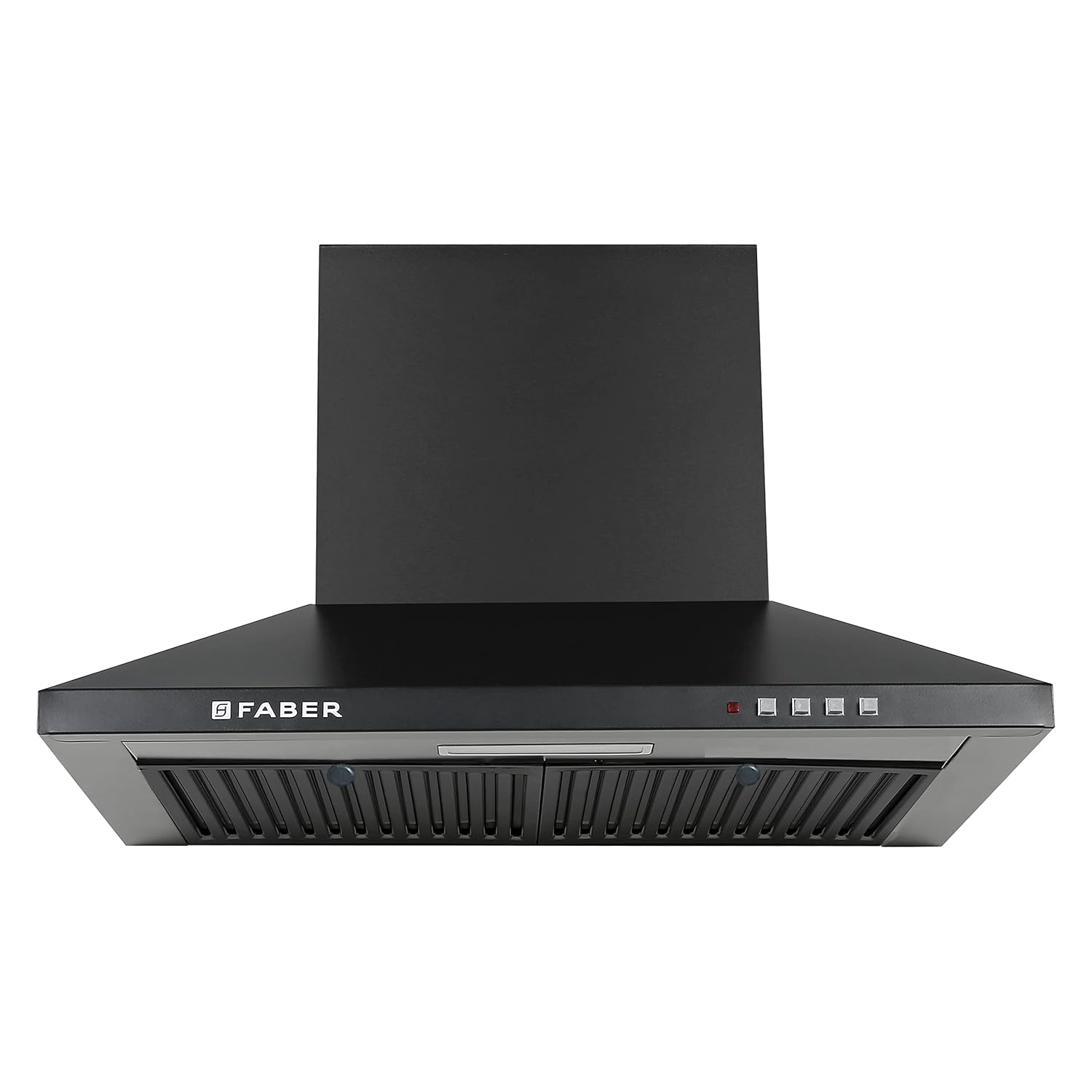 ₹6,619
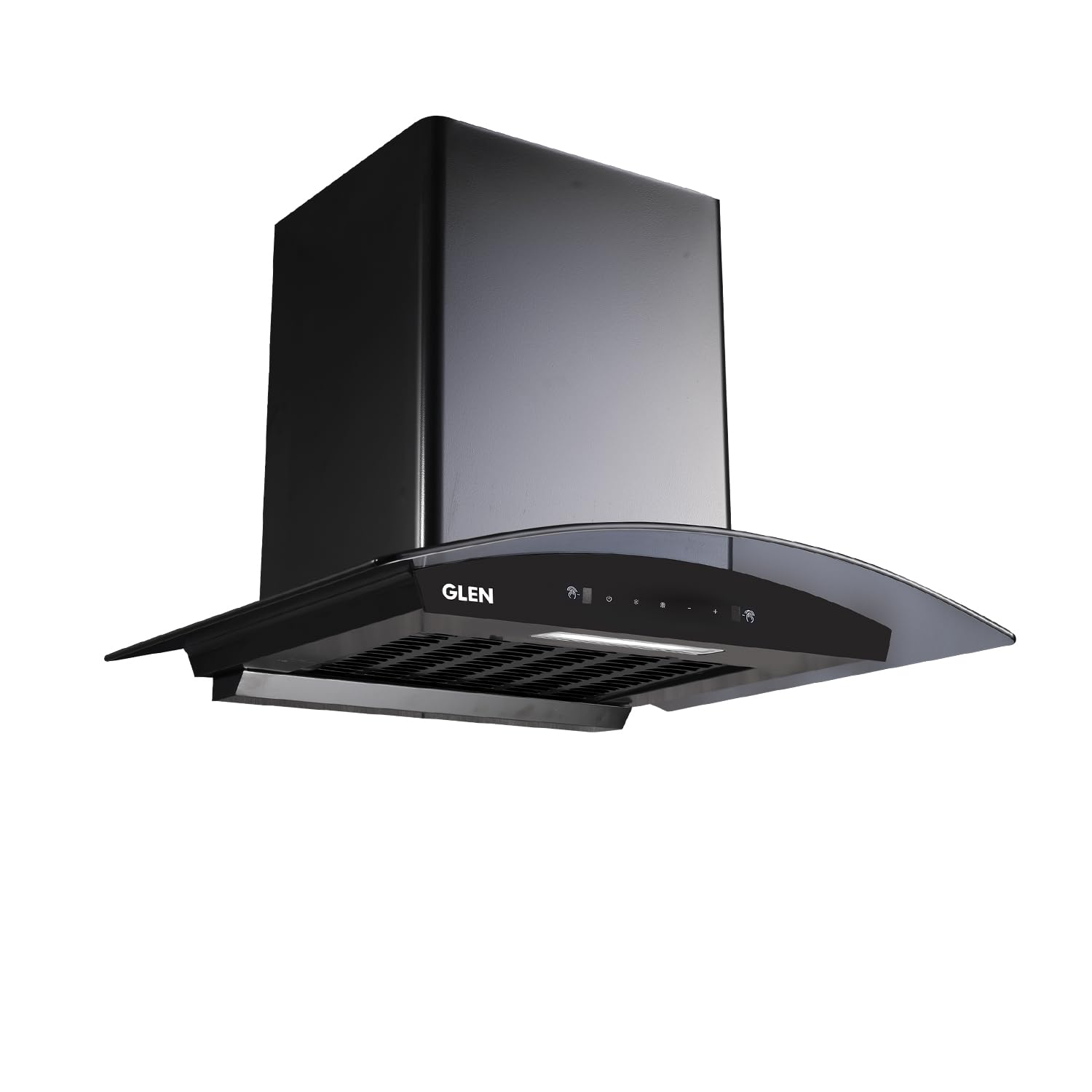 ₹10,699
Frequently Asked Questions
Which is better — Faber or Glen chimney?
For heavy daily Indian cooking and buyers outside major metros, Faber is the stronger choice — 12-year motor warranty, 49 dB quiet operation, baffle filter durability for high grease loads, and a 300+ franchisee service network across India. For buyers in metros with a modern modular kitchen who want thermal auto-clean filterless convenience, higher suction, and curved glass premium aesthetics, Glen is worth the ₹4,080 premium. Faber's 4.6 stars across 5,415 reviews versus Glen's 4.0 across 1,829 is a meaningful validation gap that reflects more consistent real-world ownership satisfaction.
Is Glen a good chimney brand in India?
Yes — Glen is a dedicated Indian kitchen appliances brand with over two decades of chimney-specific engineering experience. Their thermal auto-clean technology is a genuine differentiator over standard filterless auto-clean systems, particularly for kitchens where ghee and coconut oil are used regularly. Glen chimneys are well-regarded in the modular kitchen segment and their designs are widely specified by interior designers for premium kitchen renovations. Their service network is strong in metros and large cities — outside these areas, service consistency is less predictable than Faber's more established pan-India franchisee network.
Which is better — baffle filter or filterless chimney for Indian cooking?
For heavy daily Indian cooking with significant oil, ghee, mustard oil, and deep frying — baffle filter is the more durable long-term choice. Baffle filters handle sustained high grease loads without impeller clogging, maintain consistent suction between cleans, and are specifically designed for the kind of grease volume Indian cooking produces daily. For moderate to regular Indian cooking where low maintenance is the priority, filterless auto-clean suits better — no monthly filter scrubbing, just periodic oil collector emptying. Match filter type to your cooking intensity rather than defaulting to either technology without considering how your kitchen actually operates.
What suction power is enough for an Indian kitchen?
For a standard Indian kitchen up to 150 square feet with a 2 to 3 burner stove and regular cooking, 1000 m³/hr is sufficient — the Faber Pluto covers this comfortably. For kitchens above 150 square feet, 4-burner hobs, or households with heavy daily frying, 1200 m³/hr and above is more appropriate — the Glen Hood Senza's 1200 m³/hr suits this use case. Buying significantly more suction than your kitchen size requires increases noise and electricity consumption without meaningfully improving smoke and grease clearance.
How often should a kitchen chimney be serviced in India?
For baffle filter chimneys like the Faber Pluto, the baffle filter should be removed and cleaned with hot soapy water every 3 to 4 weeks for kitchens with heavy daily cooking — less frequently for lighter use. The oil collection tray should be emptied monthly. For filterless auto-clean chimneys like the Glen Hood Senza, run the auto-clean cycle monthly and empty the oil collector cup after each cycle. Annual professional servicing for both types — cleaning the motor, checking the impeller, inspecting the wiring and LED lights — is recommended regardless of filter type to maintain suction performance and extend motor life.
Which chimney brand has the best service network in India?
Faber has the most extensive dedicated chimney service network in India — 300+ franchisees covering metros, tier-2, and tier-3 cities, with Pune-based manufacturing ensuring domestic spare parts availability without import delays. Elica under Whirlpool's ownership is developing its network across India. Glen is strong in metros. KAFF is strong in the modular kitchen segment in large cities. For buyers in smaller cities or towns, Faber's geographical service reach is the most reliable among all chimney brands currently operating in India.
Also Read: Best Water Purifiers Under 10000 in India 2026 | Faber vs Elica Chimney: Which Should You Buy? | Best Air Fryers Under 5000 in India 2026